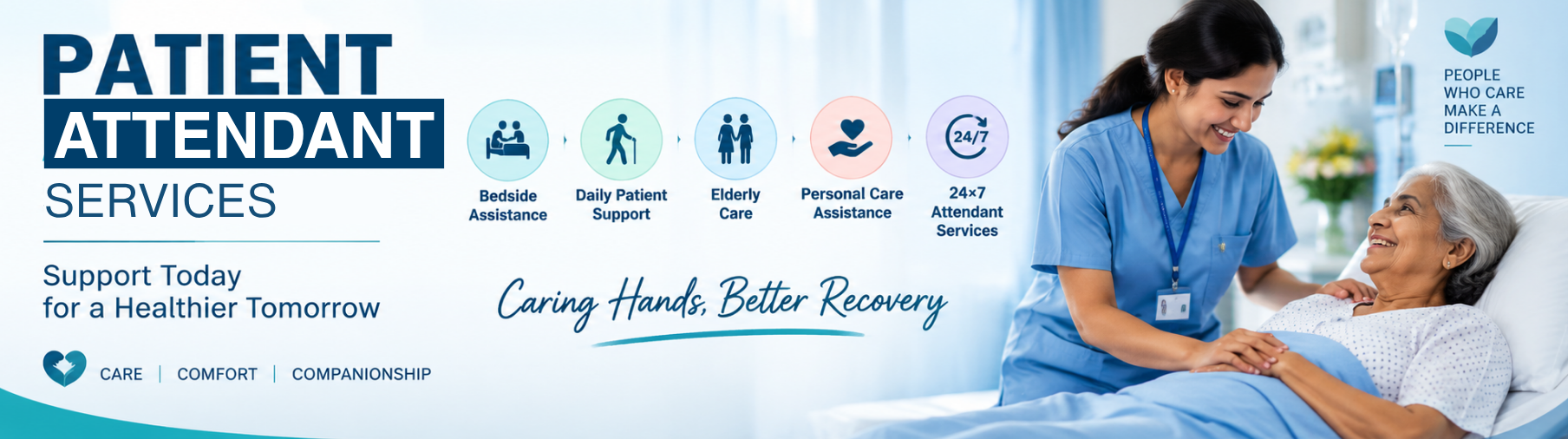
Professional Medical Attendants at Home
When a patient needs help with daily living activities but does not require intensive nursing care (like IV lines or injections), a trained Medical Attendant is the perfect solution.
Our patient attendants act as the primary caregiver at home, assisting with personal hygiene, mobility, feeding, and basic vitals monitoring to ensure the patient recovers comfortably and safely.
- Trained in basic life support and first-aid
- Supervised by senior nursing staff
- Empathetic, background-verified professionals
What Does a Medical Attendant Do?
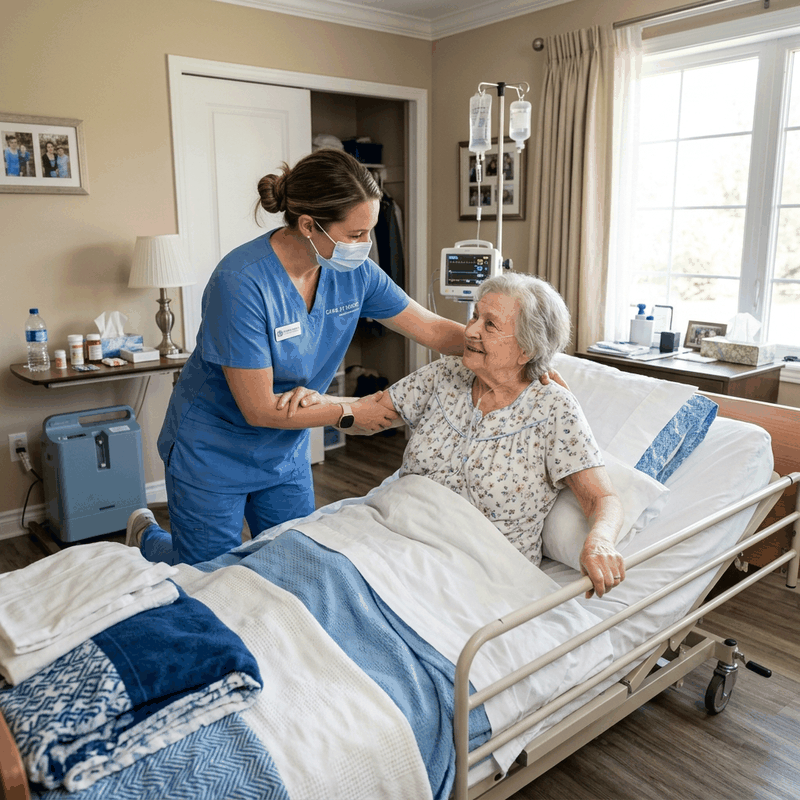
Our attendants bridge the gap between family care and hospital care, handling all non-invasive medical and personal needs.
Personal Hygiene Care
Assisting bedridden or weak patients with sponge baths, changing clothes, oral hygiene, and safe toileting or diaper changes.
Mobility & Transfers
Helping patients safely move from the bed to a wheelchair, assisting with prescribed light exercises, and preventing falls.
Feeding Assistance
Serving nutritious meals on time and assisting patients who have difficulty eating or swallowing, ensuring they stay hydrated.
Vitals Monitoring
Regularly checking and logging blood pressure, pulse rate, oxygen levels, and temperature for the doctor's review.
Medication Management
Ensuring all oral medications are taken at the correct time as prescribed by the doctor, preventing missed doses.
Bed Sore Prevention
Regularly turning and repositioning bedridden patients every few hours to prevent the formation of painful pressure ulcers.
Who Needs a Medical Attendant?
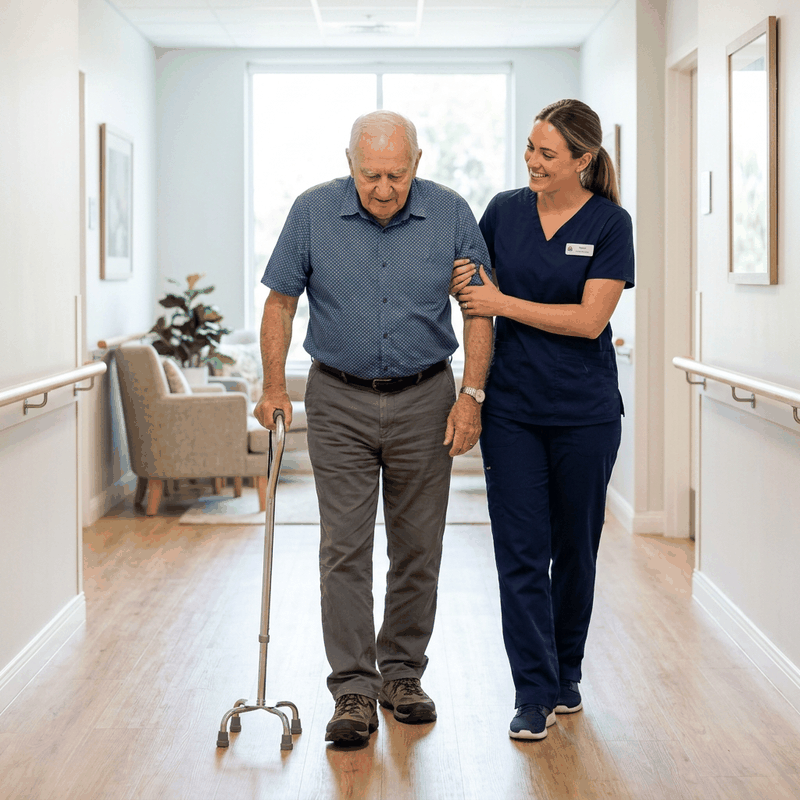
While nurses handle invasive medical procedures, attendants are crucial for daily physical support. This service is highly recommended for:
Post-Surgery Recovery
Patients recovering from joint replacements, cardiac surgeries, or spinal procedures who cannot move independently.
Bedridden Patients
Individuals paralyzed by strokes, severe arthritis, or extreme old age requiring 24/7 physical assistance.
Neurological Conditions
Patients with Parkinson's, Dementia, or Alzheimer's who need constant monitoring for their own safety.
Hospital Discharges
Patients transitioning from hospital to home who still feel weak and need help easing back into daily life.